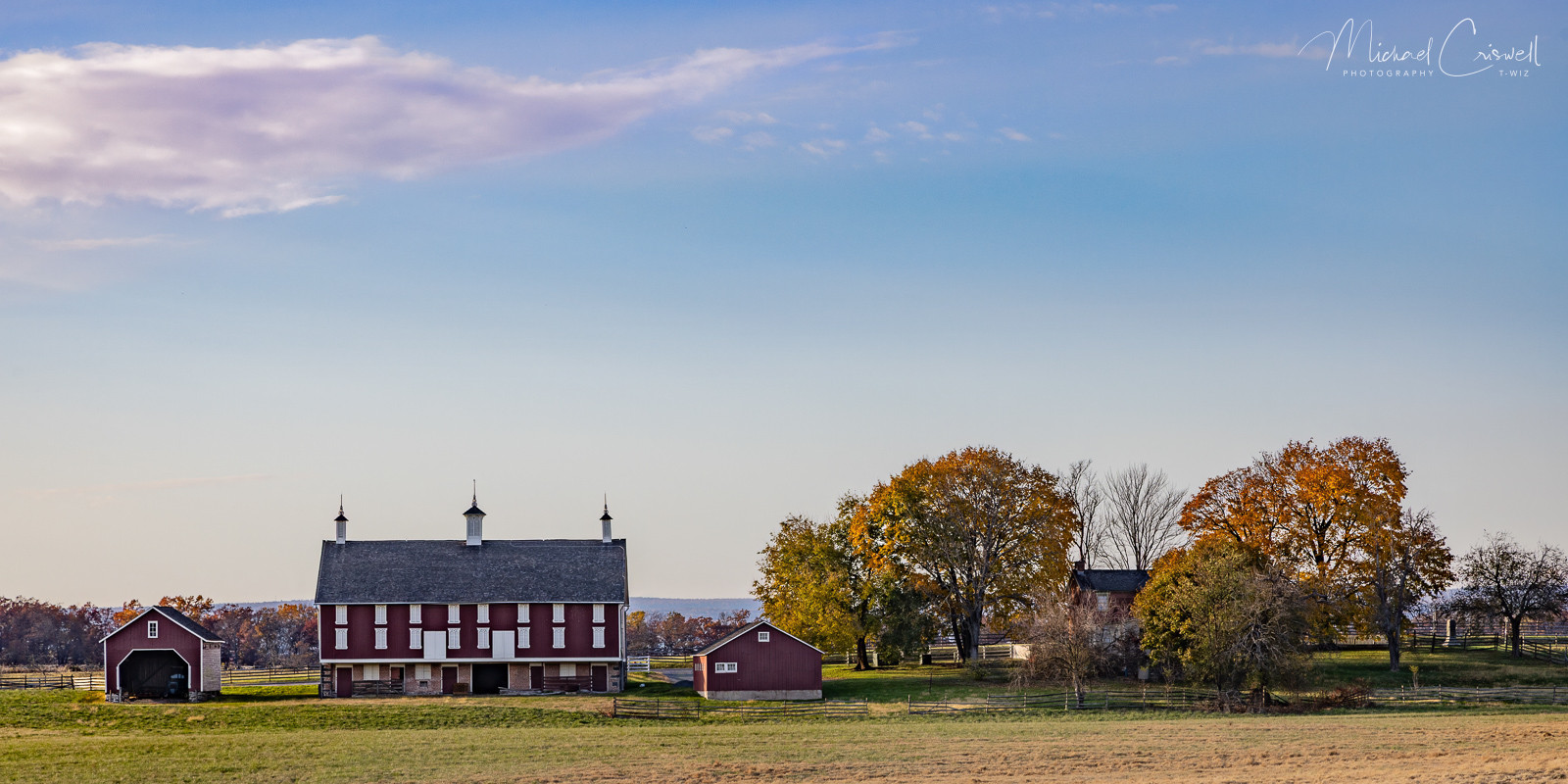
The farm belonged to Nicholas Codori, a Pennsylvania farmer of French descent. His property sat along the Emmitsburg Road, just west of the Union center on Cemetery Ridge. This location placed the Codori Farm squarely between two of the most critical areas of the battlefield: The Union defensive line on Cemetery Ridge and the Confederate approach from Seminary Ridge. Because of this position, the Codori Farm became a natural corridor for Confederate attacks—and a deadly no-man’s-land.
On the afternoon and evening of July 2, Confederate General James Longstreet launched a massive assault against the Union left and center. As fighting raged at places like the Peach Orchard, Wheatfield, and Little Round Top, waves of Confederate troops surged eastward toward Cemetery Ridge. Confederate brigades crossed the Codori fields under heavy Union artillery and musket fire. The open farmland offered little cover, making advancing troops extremely vulnerable. Union artillery on Cemetery Ridge poured canister and shell into the attackers at close range. By nightfall, the fields around the Codori Farm were strewn with thousands of casualties, making it one of the bloodiest single tracts of ground at Gettysburg.
The carnage at the Codori Farm on July 2 foreshadowed what would happen the next day.
On July 3, the same ground was crossed again during Pickett’s Charge: Confederate troops advanced across the Codori fields toward the Union center. Survivors of July 2’s fighting recognized the terrain as cursed ground. The farm became part of the final, doomed assault that marked the high-water mark of the Confederacy. The Codori family fled during the battle. When they returned, their home and outbuildings were damaged, fences were destyoyed and bodies of soldiers—Union and Confederate—covered their land. Like many Gettysburg farmers, the Codoris endured the brutal reality of total war arriving at their doorstep.
Thanks for stopping