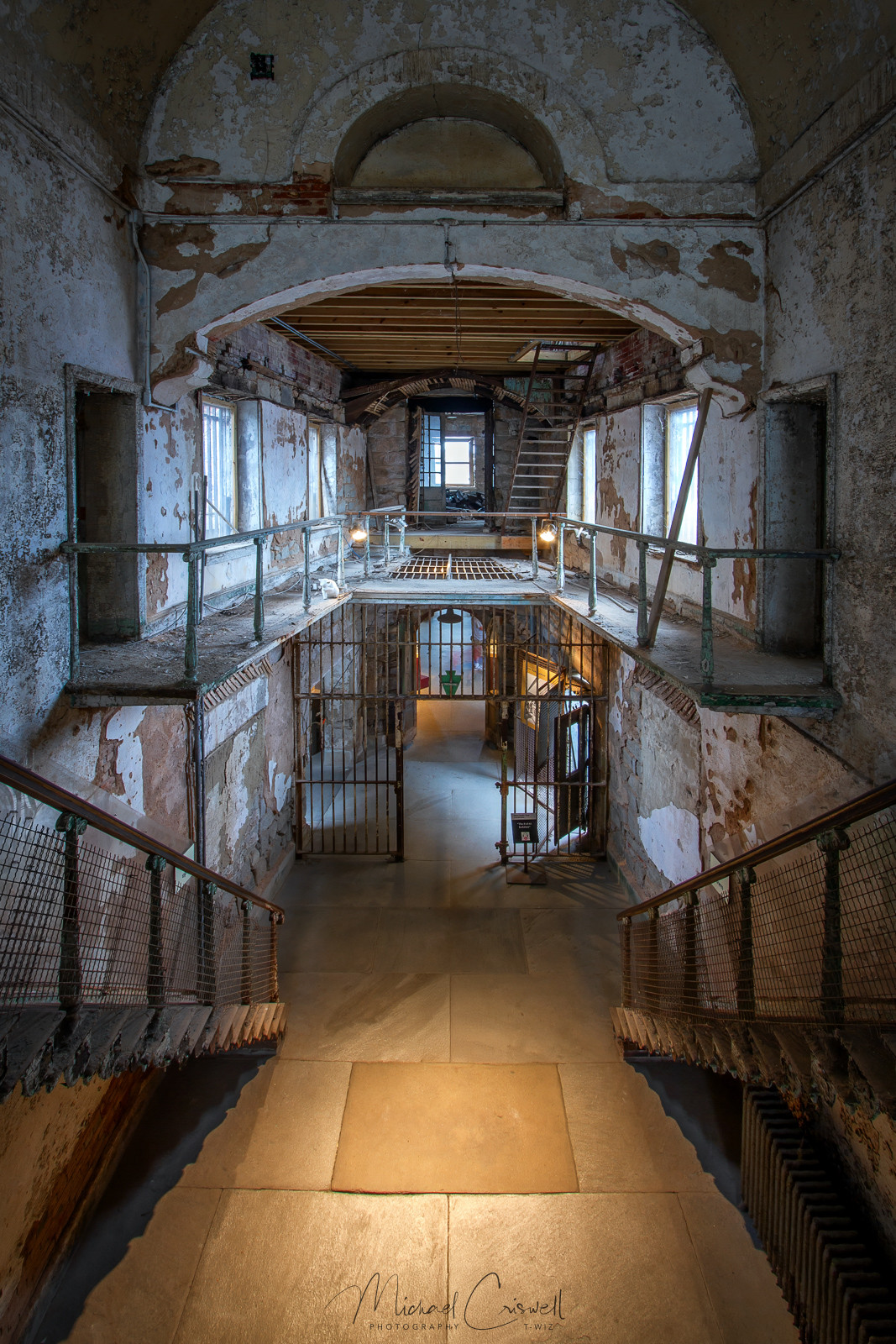
Tucked away in the heart of Philadelphia, Eastern State Penitentiary is famous for its crumbling Gothic towers and eerie hallways, but at the core of its revolutionary architecture lies something even more fascinating: the central surveillance hub—the prison’s literal and symbolic “eye.”
The hub itself was both a command center and a symbol of omnipresent authority. Guards in the center could rotate and monitor seven long corridors stretching outward, reducing the need for constant patrols. While full visual access down each cellblock wasn’t always perfect, the psychological effect was real. Prisoners felt watched—even when they weren’t. Over time, as prison populations grew and philosophies changed, Eastern State added more traditional cellblocks, and the original surveillance model became harder to maintain. But the central hub remained, quietly reminding visitors of a time when the architecture of a prison was meant to shape the soul, not just control the body.
Today, the hub still stands. Weathered and rusted, it’s a ghost of its former self—but stepping into it is like stepping into the mind of a 19th-century reformer who truly believed that a building could make a person better. Whether you see it as brilliant or dystopian, there’s no denying its impact on the future of prison design around the world.
Thanks for stopping